Big Data, Scarce Data: Which One Fits Medicine?

IMG_1139

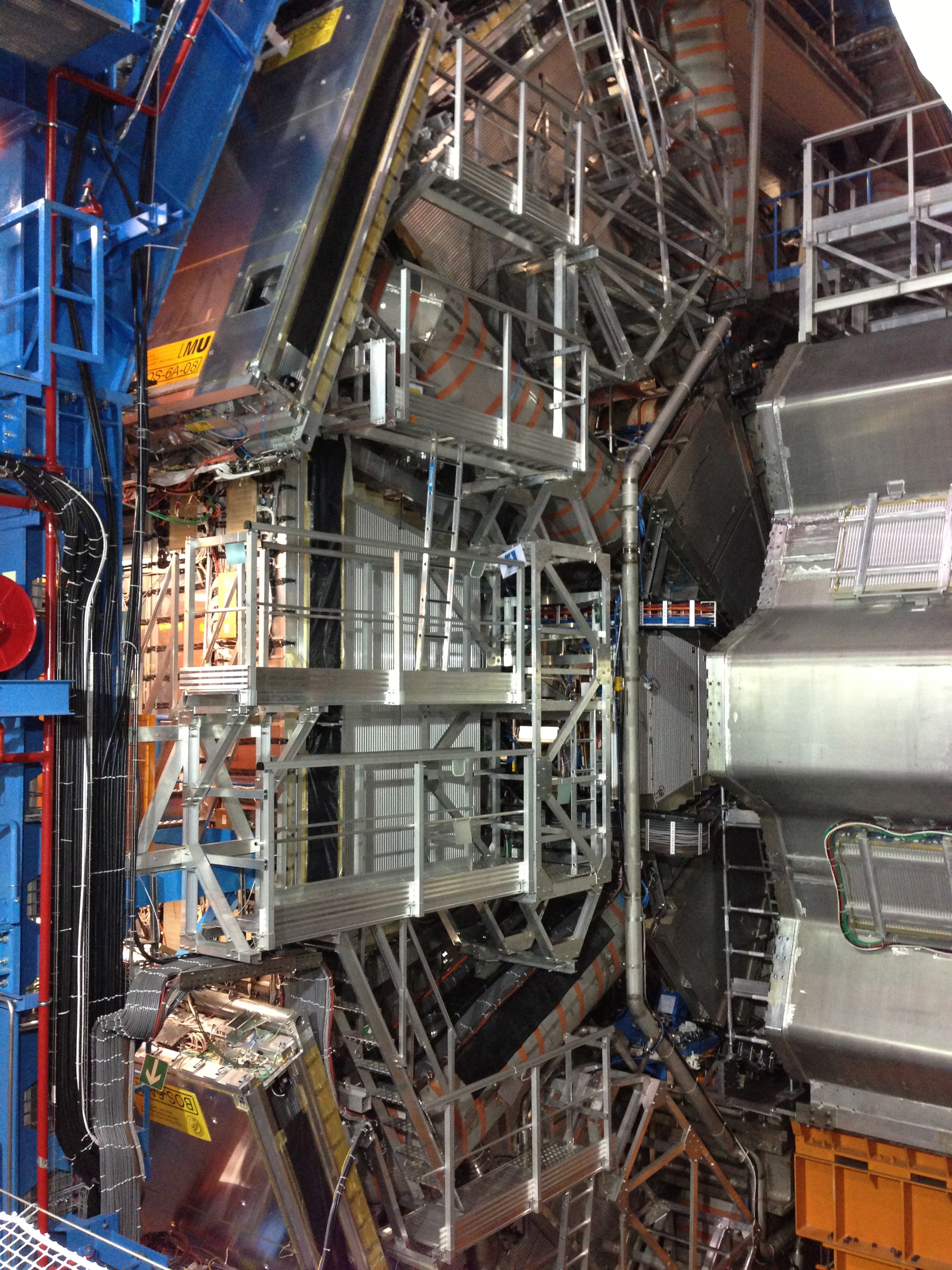
While visiting CERN last spring, there was a catch phrase used during the visit that stick in my mind. For the ATLAS detector, at the heart of one of the 4 main experiments at CERN and also one of the experiment that found experimental evidence for the Higgs boson (or a Higgs boson…), the interesting data were the equivalent of a 100 megapixels camera taking 400 photos per seconds (or maybe the other way around, but it does not change the shear scale of things)!

This amount of data is after all kinds of real-time software and hardware processing because the raw data during normal operation (read beam on condition) is close to 1 PetaBytes/sec (MB, GB=1000MB, TB=1000GB and finally PB=1000TB)…and this is only for ATLAS. In fact everything about the Large Hadron Collider (LHC) is big, from cost, to equipment, to human resources and data generated. Nature had an interesting article about how the data are handle and distributed worldwide among the collaborators.
IMG_1150

Now what about medicine? We hear a lot about big data in biological sciences and medicine. The main problem, at least in medicine in my opinion, is not that there is too much data for the researchers and physicians but rather the other way around. Database for clinical trials conducted at various levels (from internal trials at individual hospitals to more global trials) are not all, or at all(!), compatible with each other. Furthermore, numerous database tends to be incomplete not by design but simply from the difficulty of filling and ensuring data integrity. While big data also sounds great for personalize medicine, personalize medicine by definition means low numbers of very specific medical conditions. Overall, we are unfortunately at this point in time in a scarce data mode.

The next big step for big data in medicine is a revolution with regards to database management, sharing and analysis. And yes personalize medicine will likely mean bigger research consortium and more sharing of data. There is a lot to learn from the particle physics community and initiative like the LHC. I do hope that those big data grant programs we are seeing in our country is to address that in priority. Until then, we will remain with incomplete or scarce data in medicine.
Nobel Prize Week: Physics Nobel Prize for the Higgs Boson!

This is this time of the year again when Nobel prize winners are announced. As expected, the physics one goes for the Higgs boson following the experimental confirmation by CERN. More precisely the Prize is given to Englert and Higgs.

Note added: Physical Review Letters announced that the 1964 articles from the nobel winners are now available for free…Physics Letters B did something similar regarding the experimental papers from ATLAS and CMS during the summer of 2012. So all in all, the four key papers pertaining to then Higgs boson (at least for now) are available for anyone with internet access to consult!

Massive Open Online Course (MOOC) in Scientific Writing

Want to get better and more effective at writing scientific manuscripts? Stanford is hosting a free MOOC course on the topic. The content look very interesting:

Week 1 : Introduction; principles of effective writing (cutting unnecessary clutter)
Week 2 : Principles of effective writing (verbs)
Week 3 : Crafting better sentences and paragraphs
Week 4 : Organization; and streamlining the writing process
Week 5 : The format of an original manuscript
Week 6 : Reviews, commentaries, and opinion pieces; and the publication process
Week 7 : Issues in scientific writing (plagiarism, authorship, ghostwriting, reproducible research)
Week 8 : How to do a peer review; and how to communicate with the lay public

LINK:  Writing in the Sciences | Coursera.

A new lifetime project!

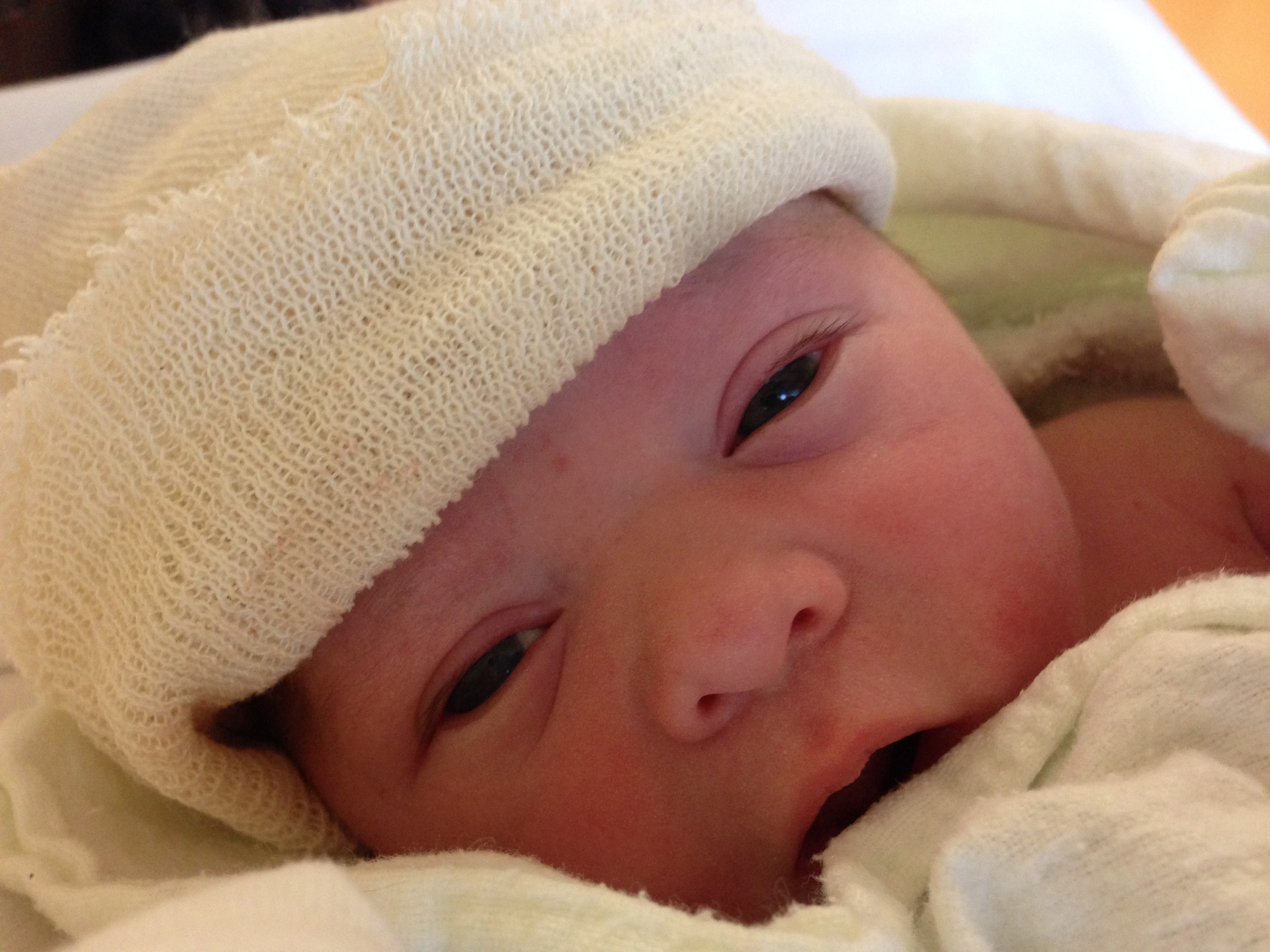
As of yesterday, we have undertaken a new project that will last a lifetime. This is the third of such project for us. Since a picture is worth a 1000 words, here it is:

IMG_1491

As with any project like this one, it will required time, patience and, most importantly, unwavering love. And as with any project I like to undertake, it will be fun 😉

Apple A7 chip and iOS 7 thorough reviews available…

For those of you following the tech world, in particular computers, the announcement of the A7 64 bits SoC probably got a WOW out of you. It did for me. To me screen size, phone shape and the same has nothing to do with innovation. The issue of 4″ vs. 4.5″ vs. 5″ screens is like preferring a 13″ vs. 15″ vs. 17″ notebook or a 50″ vs. 65″ TV set. However, screen technology providing rendering image, resolution, contrast, color delivery (gamma, …), lower power consumption and the combination of all of them and more that is innovation. The same for custom, optimized and powerful SoC chips that drive these micro-computer… errr smartphone.

Quite frankly looking back at computing since the Z80, TRS-80 and commodore when I started on my first computers, the power packed in commercially available device of such as small format as the iPhone 5S, fitting in one’s pocket and working for hours before recharge, is absolutely amazing. In addition it delivered to the general public a 64 bits platform along with the OS and numerous apps (all of Apple apps on the iPhone 5S have been recompile in 64 bits). It might not register as a big deal to most phone users but it is from a technological standpoint. Also interesting that ARM was joint venture between Apple and two other companies in part to produce power efficient chips for the Newton, such a long time ago it seems.

A very interesting review, with benchmarks, can be accessed at AnandTech. We will certainly know more when someone actually get a layout of the chip (from high-res X-ray), but still very interesting. The review also look at the integrated camera and fingerprint system. Another interesting read is Daring Fireball takes on 5S new technologies.

Today was also the public release day for iOS 7 (like it or not!). Ars Technica published an in-depth-review.

Good reading 😉