So far, posts in this digital office series this blog have tackled the hardware selection and components, OSX and iOS software, and finally the inputs or “Inboxes”. In this post, I will try to illustrate how all the pieces come together and making it all work.
Category Archives: Technology
Cultured Code Things 2 for OSX and iOS it out…finally!
In the included figure, you can switch Things for your favorite task manager. However, at this time on the Mac I do not think you will be able to reach this level of integration and ability to deal with a large number of projects with applications other than Things and OmniFocus. No, a simple task-only list application won’t cut as it does not scale.
– Luc Beaulieu, Digital office part IV
Yesterday, (August 9 2012), Things version 2.0 was released on all platforms (Mac, iPhone and iPad). The major newsworthy portion of these releases is that after years of waiting (no kidding!), Cultured Code has finally and officially introduced a fast and scalable cloud sync on OSX and iOS devices. The beta version was quite reliable and I had adopted it as my main daily usage a few months ago. Going from the beta to the new official 2.0 release went like a breeze.
This version also introduces a new daily reviews which I really likes in the beta version and a more polished UI on iOS. Quite frankly the iPad version is simply gorgeous ever since it was released in 2010. Doing a weekly review on the iPad is even fun!
The presentation of individual tasks by Areas and Projects had been removed for a while in the OSX beta version but I assumed that the numerous peoples on the forum asking for the option to be reinstated has found a good hear within the developers; the preference pane now provides for this specific choice (which I turned on immediately).
Since I am still with the iPhone 3GS, I cannot comment on the integration with Siri and Reminders (as described by Cultured Code) but on OSX you can indeed pick one list from Apple’s app and have a two way sync (including display in the new notification center).
Kudos Cultured Code 😉

Old technology, new science!
Space probes Pioneer 10 and Pioneer 11 were launch in the early 70’s with what would be nowadays called rudimentary technology. Yet they had extremely long, in fact 15 times longer than the expected minimum of 2 years(!), and productive life. These were truly amazing and well-design engineering pieces.
Yet even as the probes are out of touch with us, new science is being done as reported by Ars Technica.
Thinner, lighter and faster
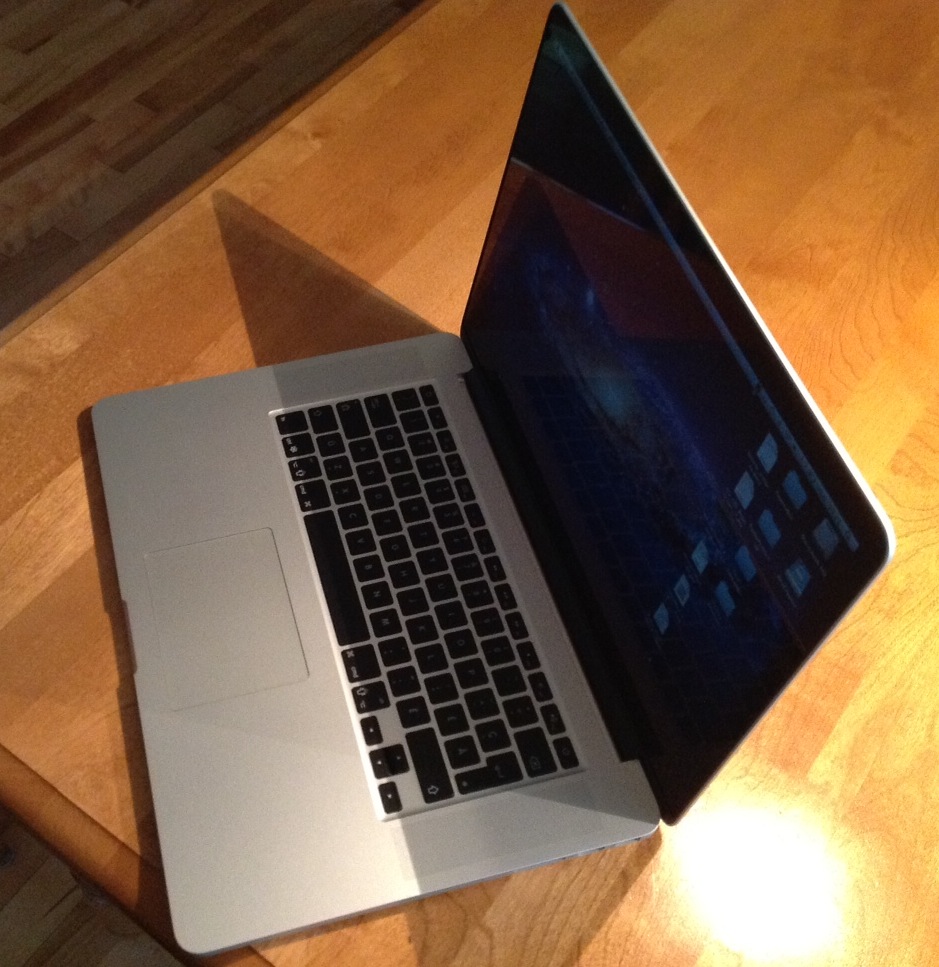
Just received my new workhorse, a brand new MacBook Pro Retina display. 2.7 Ghz Quad-core i7, 16 Gb ram and a large 750 Gb SSD drive 😉
So far, not only the display is quite amazing but the speed of the thing. Booting take less than 11 seconds thanks to the new generation of SSD drive used in this MacBook Pro. Get off the sleep mode is almost instantaneous. The screen remain visible even as you approach 180 degrees. The difference in weight with my 2010 MBP is obvious and this notebook is clearly thinner. I will get a few weeks of usage and report on the lack of DVD/CD drive (which I have not been using very often on my old MBP).
Google, Apple and you: intellectual properties
This got to be the most twisted line of thought in all of this smartphone patent war I have seen up to now in order to get to use some else inventions for free:
Who gets to define what is “great” or when something is too “popular”? This is not like a 100m race with precise time measurements. History teaches us that once you set one of these “soft” standard, the standard tends to be lowered with time until it becomes meaningless.
OK, enough of Google and Apple. Every one, researchers and graduate students alike have the potential to come by a worthwhile invention. Protecting it is supposed to provide incentive to the inventors to benefit from their work and the time spawn is usually limited (contrary to the copyright which can now, in certain countries, last for decades even for works that heavily borrow from the public domain – another debate).
Invention protection through patents can be a good approach in certain situations e.g. you’ve developed something new, useful, that can be actually implemented or made, has a market large enough to potentially make money, … I also strongly believe that graduate students should get expose to intellectual property themes early during their graduate studies.
What do you think?
Evolving technology
Any sufficiently advanced technology is indistinguishable from magic.
Arthur C. Clarke
I certainly love technology. They are enablers for thing we thought impossible to perform in a reasonable amount of time just a decade ago. My children laugh at me when I tell them of my first 20 Mb drive, which was the size of a big, thick pizza box. The comparative for them are the 32 or 64 Gb thumb drive! Similarly, today cellphones are more powerful than supercomputer of the 1980’s.
The growing complexity of technology is remarkable and many technologies “evolve” at a rapid, accelerating pace. Kevin Kelly’s book What Technology Wants constitutes a highly recommended read. The increasing complexity is illustrated for numerous technologies as function of years. Furthermore, there is an interesting discussion about the human-technology interaction and how difficult it is to anticipate the numerous failure modes (what can actually go wrong) when dealing with complex systems and trying to include fail safe measures.
I would also like to point out this TED talk entitled how technology evolves.