Grading of final exams in the coming weeks? A good read from University Affairs.
Why students need to fail | University Affairs
Reply
Grading of final exams in the coming weeks? A good read from University Affairs.
Having a PDF management system, which allows in-app citation (e.g. WORD, Pages, Mellel, …), is a necessity for scientists and researchers. On OSX, we have the chance of having the choice between extremely well-design and efficient applications such as Sente, Mendeley and yes, Papers (there are of course free options, as always it depends how much time you want to spend working with your tools relative to working on your tools!).
In the past I have used Endnote, Zotero, Sente and finally settled for Papers starting at version 2.0.8 for its extremely well thought-of citation mechanisms, PF editing options and nice interface. A review is available here in the e-office series.
Zoom to the latest version (still a beta) of Papers. Yes the interface changed quite a lot, both on OSX and iOS. Mekentosj seems to have adopted the design element of iOS 7 as a reference across the board. Quite frankly, the only thing I do not like in iOS 7 is the color scheme used for certain icons. Otherwise, I like it very much: it is clean, simple, introduced great new stuffs and does not get in the way.
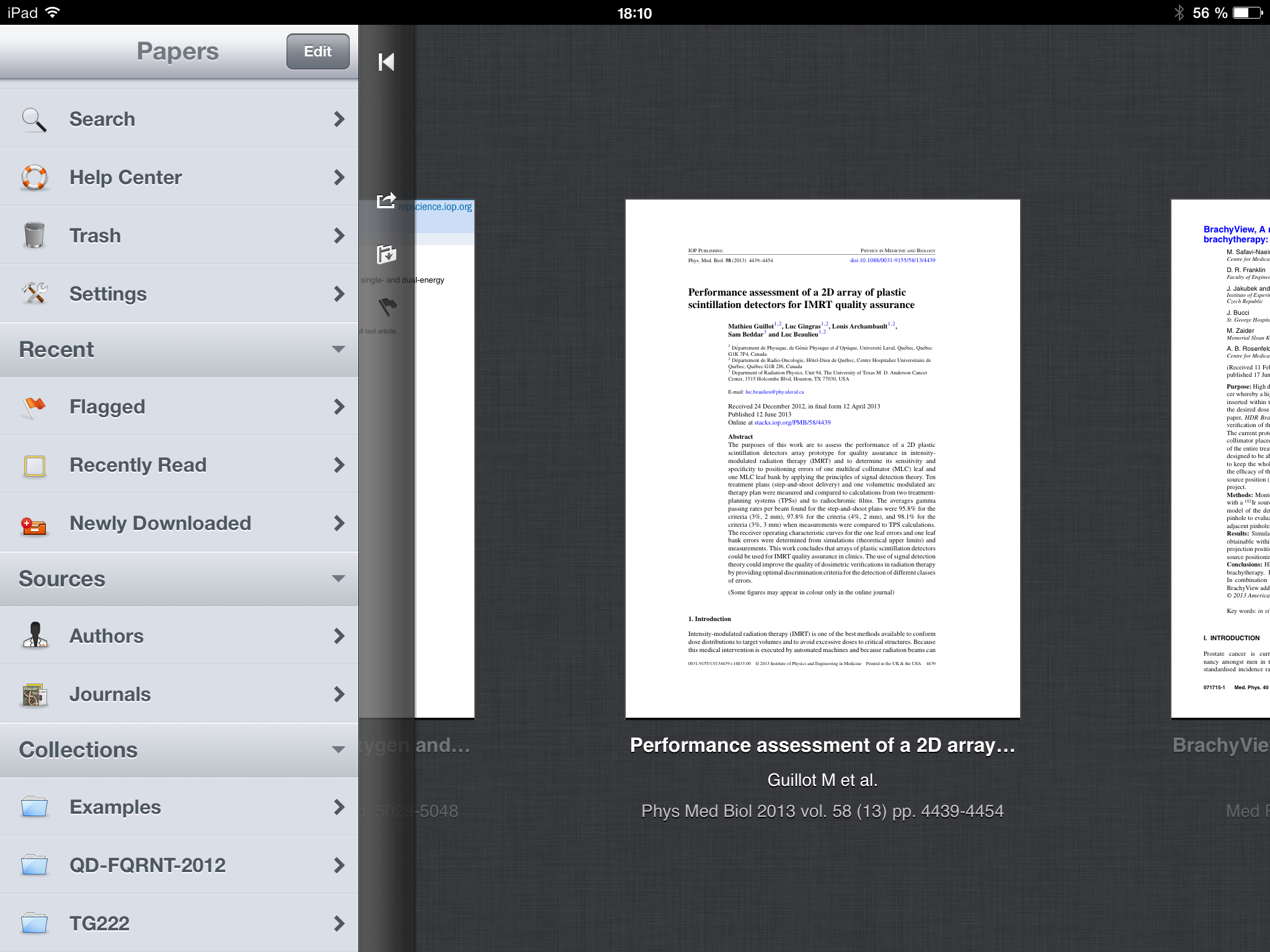
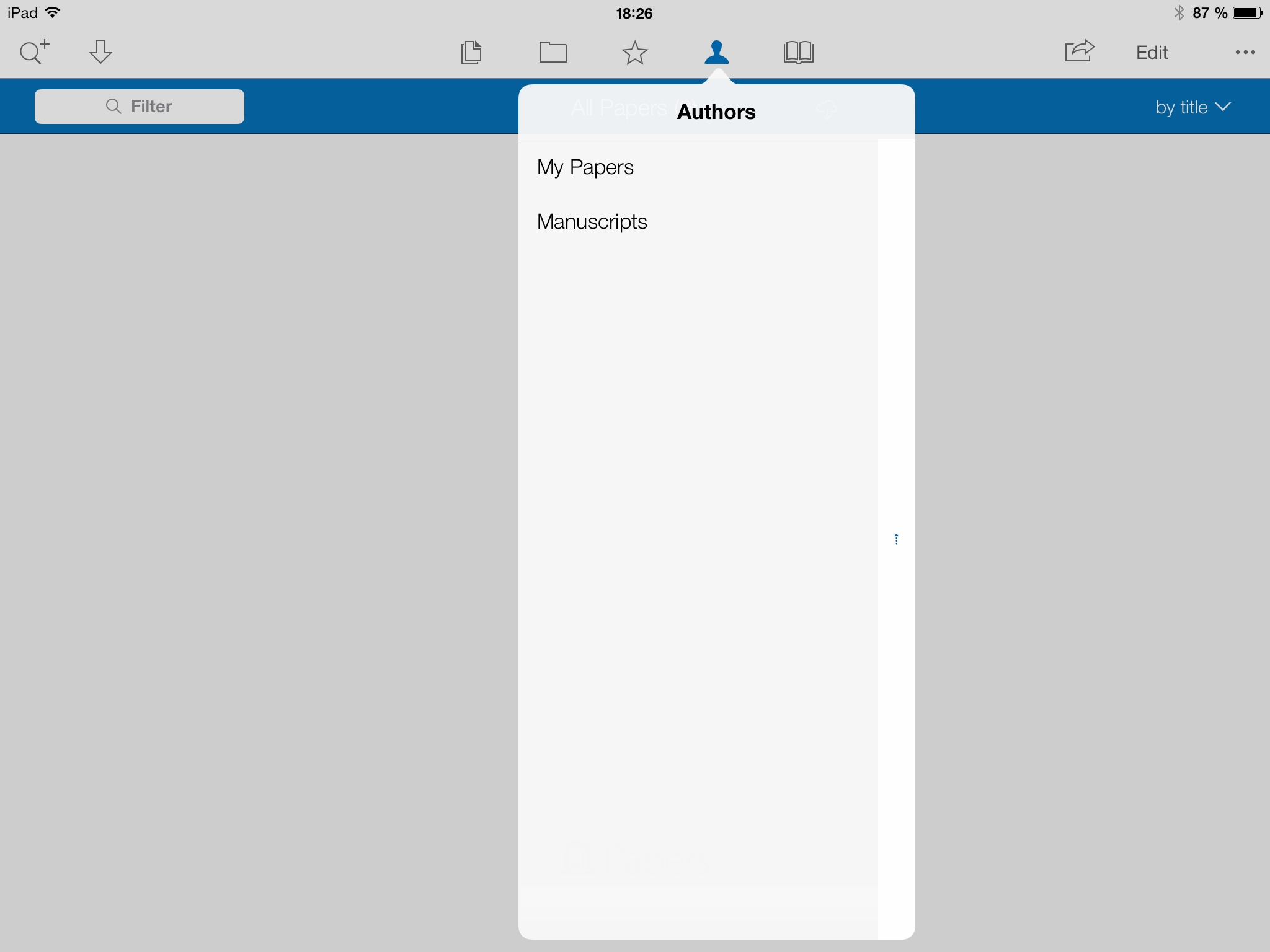
Below are the screen captures for iOS version of Papers and Papers3.
So, you say great this guy love Papers 3. Not at all. Design change you can get use to it (assuming it is for the better) but key missing feature is a problem.
Papers 3 allow syncing via DropBox or import/export of the whole library…Gone is the great WiFi sync of the previous version. Why it is this important? My library is large, closing in 5 Gb. I do not want to put that on DropBox (or on any servers for that matter) nor do I need to have all of that in the Cloud. The DropxBox options look interesting for a small library but for large libraries I am not convince and I feel it is unnecessary to pay for cloud storage space to store my library (this is why I do not like Mendeley for example). Even my library at close to 5 Gb is not that large and only contains over 4000 entries.
When I ask Mekentosj about it, I received the following from the support staff:
Hi there
Thank you for your feedback regarding this. I’m afraid that Dropbox is the only solution at the moment. However, we hope to include a possibility to sync via Wi-Fi in some point as well. However, depending on the technical aspects and Papers release cycle, it’s hard to know yet when that’s going to happen, so please be patient
So it might or might not happen in the future. For now, I would think that this is a big deal for users with large libraries. I reverted back to Papers2 like a number of my colleagues.
Overall, very disappointing first contact with Papers 3
NOTE: Academic workflow on Mac also has a coverage of Papers 3 which describes other important issues

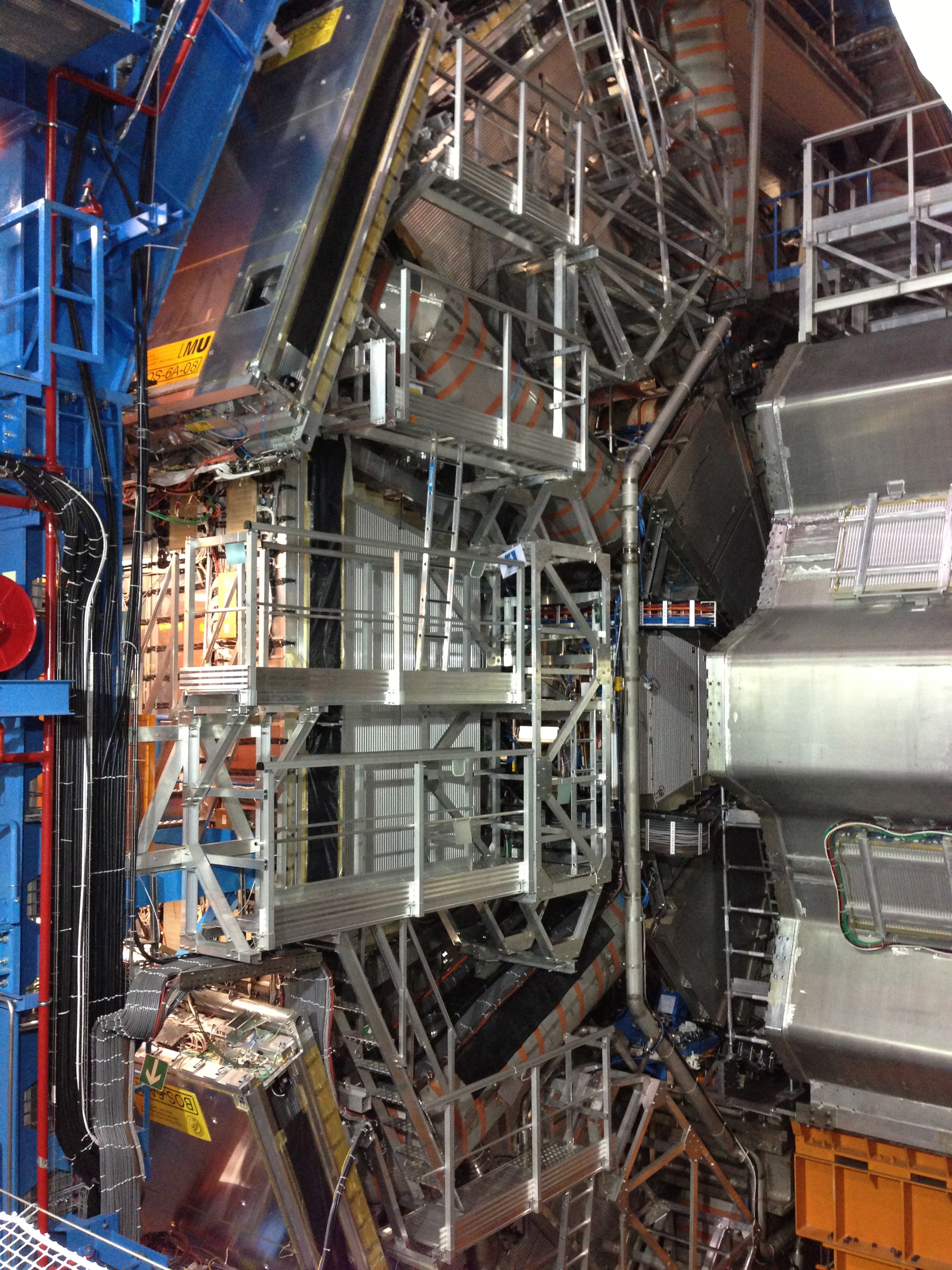
While visiting CERN last spring, there was a catch phrase used during the visit that stick in my mind. For the ATLAS detector, at the heart of one of the 4 main experiments at CERN and also one of the experiment that found experimental evidence for the Higgs boson (or a Higgs boson…), the interesting data were the equivalent of a 100 megapixels camera taking 400 photos per seconds (or maybe the other way around, but it does not change the shear scale of things)!
This amount of data is after all kinds of real-time software and hardware processing because the raw data during normal operation (read beam on condition) is close to 1 PetaBytes/sec (MB, GB=1000MB, TB=1000GB and finally PB=1000TB)…and this is only for ATLAS. In fact everything about the Large Hadron Collider (LHC) is big, from cost, to equipment, to human resources and data generated. Nature had an interesting article about how the data are handle and distributed worldwide among the collaborators.
Now what about medicine? We hear a lot about big data in biological sciences and medicine. The main problem, at least in medicine in my opinion, is not that there is too much data for the researchers and physicians but rather the other way around. Database for clinical trials conducted at various levels (from internal trials at individual hospitals to more global trials) are not all, or at all(!), compatible with each other. Furthermore, numerous database tends to be incomplete not by design but simply from the difficulty of filling and ensuring data integrity. While big data also sounds great for personalize medicine, personalize medicine by definition means low numbers of very specific medical conditions. Overall, we are unfortunately at this point in time in a scarce data mode.
The next big step for big data in medicine is a revolution with regards to database management, sharing and analysis. And yes personalize medicine will likely mean bigger research consortium and more sharing of data. There is a lot to learn from the particle physics community and initiative like the LHC. I do hope that those big data grant programs we are seeing in our country is to address that in priority. Until then, we will remain with incomplete or scarce data in medicine.
Want to get better and more effective at writing scientific manuscripts? Stanford is hosting a free MOOC course on the topic. The content look very interesting:
“Practice is the best of all instructors”
Publilius Syrus (Roman author, 1st century B.C.)
Back from the AAPM scientific meeting, and kudos’ to the organizers for an excellent meeting. Over the past few years, they have set-up a “Best in” category regrouping the 5 highest scored abstracts in each 3 broad categories of the meeting. Not only do they get oral presentations but they also deserved a special poster viewing session. An extremely interesting and exciting session!
Our group is well represented at this year AAPM meeting. 2 Faculty and 7 graduate students for a total of 11 oral presentations and 2 posters.
For a number of these students, it will be their first experience presenting at such a big event (over 3000 participants). Also for many of them, it will be their first scientific presentation in English. Hours of preparation and rehearsing for 5 minutes (snap oral) or 8 minutes (regular oral) presentations. While, I do tell them that the shorter the talk the more time (usually many hours!) is needed to select and organize the visual materials (aka slides), they do not realize it until we do the general repetition during our weekly group meeting.
For each talk, we can spend between 10 to 30 minutes going over the slides, suggesting modification, addition, removal, asking questions such as: what are you try to say? What is your main message? What do you want the audience to remember from this or that slide, …
Of course, senior grad students have it easier as they already know what to expect and prepare their presentations accordingly 😉
For my friends and colleagues in the medical field, see you in Indy.
 Ruminating...